


March 20, 2015
So you’re writing a blog, but where do you start?
At Immediate Future we blog professionally for clients and ourselves, but sometimes even we as “experts” get writer’s block.
A good place to start is with the audience – what do you think they want to read? It’s simple marketing and psychology; in fact we all know people read things that they are interested in.
“People only read word-by-word on the web when they are really interested in the content.”
Zoltán Kollin, UX Myths
Search for your inspiration
Having identified your audience, a simple twitter search, using the discover feature or even Klout will show you what is trending within your audience.
But you can go further than that. Trending hashtags is another great feature of twitter if you want to do something that will gain wider attraction outside of your usual audience. This is good if you want to talk about real-time news events, which we find with clients always has a good uptake as it is always relevant. The #solareclipse and all the activity around that today is one example of a real-time event you may want to leverage.
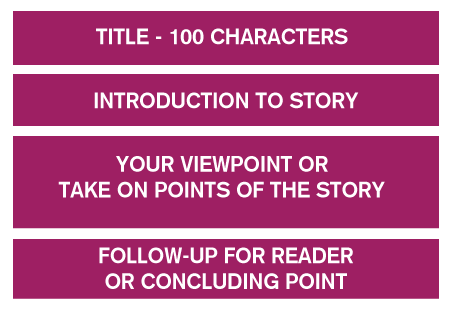
But what about blog structure?
In terms of blog structure, the following is a good place to start:
And style?
In terms of blog styles there are lots of different types of posts, but from our experience top performing blogs usually fall within the following styles:
- List: Everyone loves a list! But break the mould and stand out from the crowd by using odd numbers such as top 7 reasons etc. It doesn’t always need to be top 10.
- Make a statement: This is social, everyone loves an opinion, so share yours! Remember all the stories that focus on is xxx making xxx dead – whilst they have been done a hundred times, they work.
- Interview a thought leader: If you don’t have anything insightful to say, borrow someone else’s insight – interview style posts can work really well and can be broken down into a mini series of posts if you want to create longevity.
- Personal stories: Use your own experiences to tell a story! Or use your natural interest. For example if you have been at an event and admired the use of digital or social talk about it – everybody loves to hear a story and learn from real experience.
You’re on your way!
And finally, always optimise! Use keywords, cross-linking, quotes, references and stats!
By following all the tips above you will have a brilliant blog in no time!
Good luck and happy writing.
For useful sites to give you content ideas, feel free to visit any of the below.