


May 30, 2018
It seems this month every marketer is either talking GDPR or about creating ‘relevant content’. It’s not a surprise as the two are interlinked. With brands needing customers to engage enough to sign-up for consent programmes, content has to be meaningful, to resonate and capture attention.
The trouble is the cry for greater relevancy is a frankly a bit feeble. It’s mentioned lots, but rarely explained. A sort of throw away comment that has little substance when you look at how much quality, relevant content is produced.
Of course, the reason for this is that creating relevant content is hard. It requires us to invest time, effort and a bunch of skills. The truth is, if you want to be relevant then you need to work for it.
Start the ignition – here’s where to begin
The place to start is, of course, with the data. Well the data you can still look at (for now at least). I am talking about social data. Freely given and with a bunch of tools to help you analyse the unstructured conversations across the various social channels.
We just completed social analysis of conversations about car insurance using the social listening platform Brandwatch Analytics. Looking across a year’s worth of data, the insight helps us understand the who, what and why of conversations. The subsequent [free to download] report makes it clear what we already know: no one likes buying car insurance. But what was interesting is why people chose to post on social about car insurance. Uncover that nugget of information and you can start to unlock what actually matters to your customer.
 All shouts and giggles
Well its seems it is all about the emotions, and fairly polarised emotions at that. Folk are either angry or they want a laugh.
The biggest spikes and the most shared conversations were witty, wry memes. Especially those around whether Lightning McQueen should get car insurance or life insurance! Outside of the humour, pretty much all the rest of the posts across 12-months were angry, annoyed and frustrated. People really don’t like car insurance!
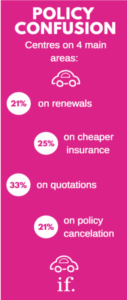
But let’s not leave it at that. After all, this doesn’t help us create more relevant conversations. Drilling deeper, we’re able to look into some of the triggers for this anger. Price increases led the charge. Driven by increases in renewals for most, but younger drivers are also outraged by Black Box requirements – it certainly isn’t seen as a benefit that brings costs down! Interestingly though, one topic contributed substantially to the collective annoyance: confusion over policies.
Policy confusion is a real consumer pain point. In fact, posts get quite detailed. They talk about the challenges of ‘changing occupation’ on forms, cancelling a policy and whether they can take the car abroad. Rather than ask for help or advice (only 1.7% of posts asked for help), social is used to vent frustration.
One core insight, one key focus for relevancy
This nugget of insight gives us one clear ‘relevancy’ angle on this particular audience segment. It’s a chance to acknowledge the pain and resolve it. To win hearts and minds and drive engagement and buy-in.
One of our clients has seen a great deal of success focusing in on the pain around policies. In social it has been running a campaign with messaging that addresses the issue head on, with wit and humour. It’s attracted a lot of attention and delivered substantial uplift.
The data mining continues though. After all, this is just one audience segment around one emotional behaviour. There are further segments that focus on the renewals for repeat purchase, and a large group of ‘annoyed’ consumers that are ‘bored’ enough of quotes and searching for insurance suppliers. You can get the details in the car insurance social research report. It’s free, well apart from a small exchange of data!