January 19, 2026
If your marketing feels like it’s taking longer to land, you’re not losing it. You’re doing the work of a buying group.
And buying groups are where time goes to die. Not because you’re wrong in any way. Because you’re trying to persuade a committee across multiple generations, that forwards screenshots, adds commentary, then decides when you’re not in the room. Forrester says the average buying decision involves 13 people, and 89% of purchases involve two or more departments.
That’s not a content problem. That’s a confidence problem.
The real headache is three generations in one decision
Let’s talk about the bit nobody admits in the campaign debrief. The buying group isn’t just bigger, it’s mixed. Across generations. Different career stages, different risk tolerance, different “this feels credible” triggers. The buyer group has changed. For good.
Forrester reports Millennials and Gen Z now make up 71% of B2B buyers. Great. Except plenty of decisions still get signed off by people with very different habits, instincts, and tolerance for nonsense.
So you end up writing one message for someone who wants the quick proof, one for someone who needs detail, one for someone who’s allergic to risk, and one for someone who just wants to know what their peers are doing so they don’t look daft internally. You’ve built a campaign. Now you’re building a translation pack.
Why it’s stealing your week
It’s the second-order work that kills you. Not the actual post.
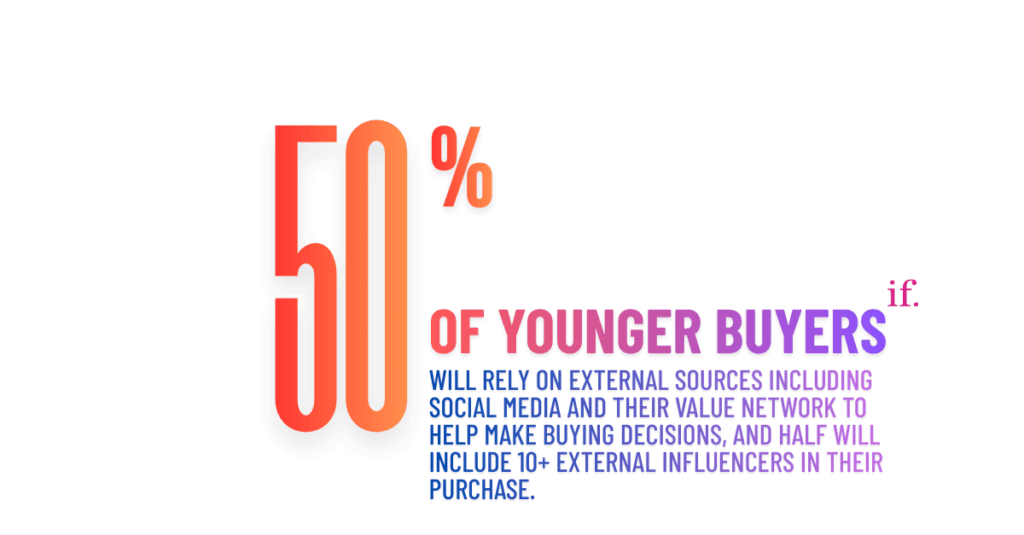
One asset turns into five versions because everyone wants something slightly different. Sales wants a shorter cut for outreach. Brand wants it “softer”. Legal wants it safer. Someone senior asks for a version “for Gen Z” like they’re a separate species. Then you spend half a day in internal meetings deciding which version is the real version.
And, the horrible truth is that buyers are doing more of this journey without you, which makes your margin for error tiny. Gartner found 61% of B2B buyers prefer a rep-free buying experience, and 73% actively avoid suppliers who send irrelevant outreach.
So if you guess and get it wrong, you don’t just miss. You get avoided. That’s brutal, but it’s also clarifying.
Early research is where the deal gets shaped
We keep treating early-stage research like it’s a warm-up. It’s not. It’s where confidence gets built, internally and externally.
B2B International found Millennials spend 13 weeks in the initial research phase, compared with 12 weeks for Gen X and 8 weeks for Boomers.
Longer research means more people touching the decision, more chances to doubt, more opportunities for a competitor to look “safer”. It also means your marketing has to do a second job. It has to travel inside the business, not just land with the person who clicked.
This is why social keeps getting dragged into the firing line. It’s visible, it’s messy, and it’s where people do credibility checks in public. But the problem usually isn’t “social isn’t working”. The problem is that the business hasn’t agreed what proof matters, for whom, and how it should show up.
Stop making content, start building belief across generations
I know, I know. You do not need another framework that becomes a poster and changes nothing.
What you do need is a calmer way to think about mixed-generation buying behaviour, without turning it into stereotypes. You also need a way to decide what to publish so it’s useful across the committee, not just entertaining on the feed.
That’s what we’re digging into on our latest LinkedIn Live.
What we’ll cover in the live
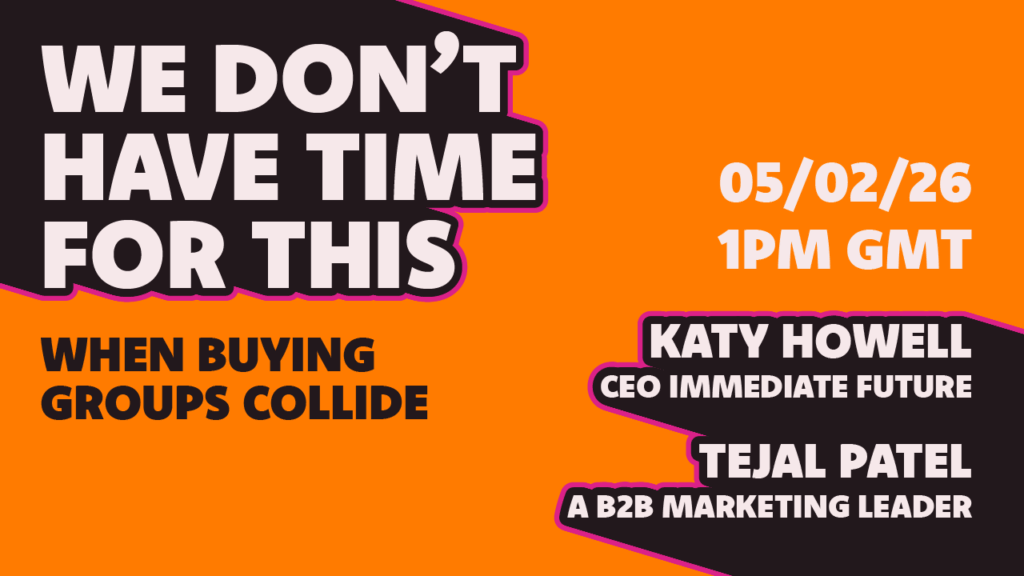
This is the first episode of “We don’t have time for this”, and I’m doing it with Tejal Patel. Tejal is brilliant at cutting through noise and getting to the behaviours that actually shape decisions.
On Thursday 5 February at 1pm, we’ll get into:
- How multi-generational buying groups actually behave when they’re trying to reduce risk
- What genuinely changes across generations, and what stays annoyingly consistent
- How to avoid stereotypes and stay grounded in context and jobs-to-be-done
- What social is doing in research and validation when nobody’s watching
- How to win back time with a smarter approach
You’ll notice I’m not giving you the neat answer list here. That’s the point. I want you in the room, with your own reality, your own stakeholders, your own “why is this taking so long” problem.
Bring the one thing that’s making your eye twitch right now. The internal cynic. The stakeholder who wants “one more version”. The team that’s flat-out but still not confident it’s moving the dial.
We don’t run your social. We make it work. And sometimes that starts with saying, out loud, WE DON’T HAVE TIME FOR THIS!