


December 10, 2025
Community isn’t a channel, it’s how your social actually works
Over the last few weeks I have lost count of how many marketers have said some version of this to me:
“We’re thinking about community for 2026.”
Often it comes with a hopeful look, as if community will magically fix retention, advocacy, research and social performance in one neat package. I get it. But when you look at the behaviour data, most brands are trying to skip to the end. They want the loyalty and insight of a mature community, while still treating social like a broadcast channel and resourcing community like a side project.
At the same time, the platforms are quietly spelling out what they really value. Not just views. Not just likes. Community behaviours. Threads, TikTok, YouTube and LinkedIn are all nudging us towards deeper interaction, and in a few cases, punishing the fake stuff.
This week I want to untangle that and look at what “community” should realistically mean for your brand in 2026.
Are communities actually a growth lever, or just a nice idea
Let’s start with the hard bit. Community is not a cheap reach play.
Across multiple studies, around 60% of businesses now report having some form of branded online community, and a big chunk of those have been running for five years or more. That tells you community has graduated from pilot project to infrastructure. It sits alongside CRM, support and content, not off in a corner as an experiment.
The strongest results cluster around four outcomes:
- better customer experience and support deflection
- higher retention and expansion revenue
- richer, faster product and proposition insight
- more credible advocacy and user content
One community trends report has roughly three quarters of organisations saying their communities improve customer experience, over half crediting communities with SEO gains, and around 90% using member suggestions to enhance products or services. Another set of case studies credits communities with contributing to 30% or more of revenue influence in some organisations.
Sources if you want to dig in: Social.plus’ overview of community stats and Chris Detzel’s summary of online community trends for leaders.
So yes, communities can absolutely be a growth lever. The catch is that the growth usually shows up in retention, LTV, product success and advocacy, not in cheap net-new reach.
From our side at Immediate Future, that matches what we see in the social data. When brands lean into community behaviours, we see lifts in meaningful signals: saves, sends, long comments, repeat participation, branded search and share of search. That is where future pipeline lives.
Communities become a key growth lever for the platforms too
Here’s the bit that really jumped out at me recently.
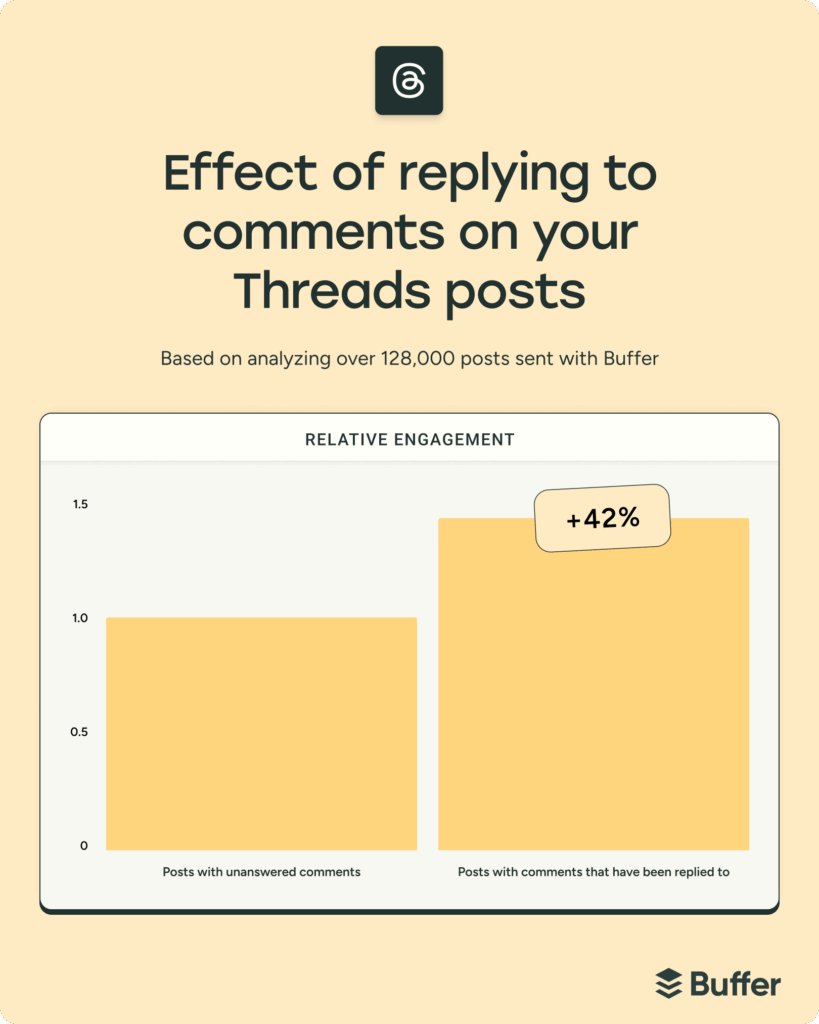
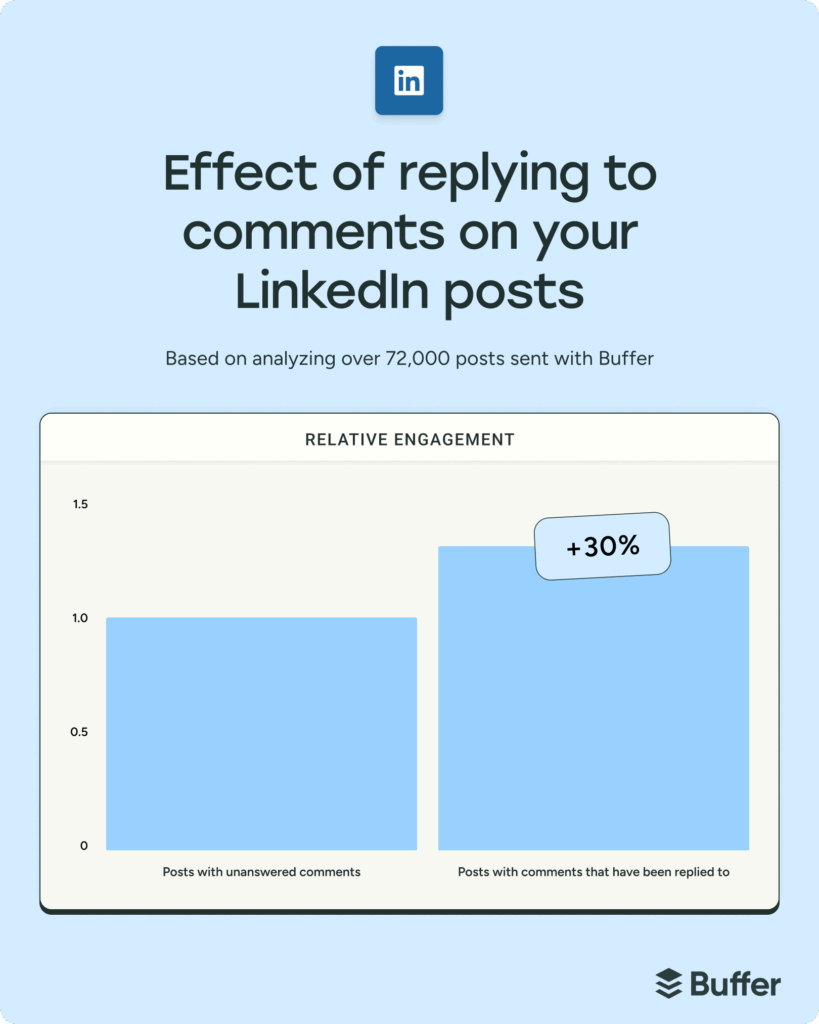
Buffer analysed nearly two million posts and found that when creators reply to comments, engagement jumps by between 5% and 42% across major platforms. Threads sits at the top of the pile with a 42% lift in engagement when you reply, LinkedIn posts see around a 30% lift, and Instagram sits in the low twenties. Facebook, X and Bluesky still see smaller but meaningful gains. You can read the detail in Buffer’s report or the Social Media Today summary.
In plain English, the platforms are rewarding you for behaving like a host, not a broadcaster.
Layers of updates from the last couple of months underline this:
- Threads has introduced reply approvals and activity filters that let you pre-approve replies and prioritise the people you follow, making it easier to manage real conversations without drowning in noise (Social Media Today; The Verge).
- Threads also launched “ghost posts” that disappear after 24 hours, explicitly designed to encourage more casual, unpolished sharing and reduce the pressure of permanence (Meta newsroom; Reuters).
- On top of that, Threads is now leaning into podcast communities with new profile and link features that make shows and episodes more visible and easier to discuss in the app (Social Media Today; TechCrunch).
- TikTok has launched Bulletin Board, a one-to-many broadcast channel for creators to share news and updates and build community directly inside the app, very much their take on Instagram’s Broadcast Channels (TikTok newsroom; Social Media Today; TechCrunch).
- YouTube is expanding its Communities feature to more creators and onto desktop, with internal experiments suggesting that channels using Communities see higher impressions and likes because there are more touchpoints for conversation (The Verge; Social Media Today).
- LinkedIn has finally said the quiet part out loud and is clamping down hard on engagement pods and fake interaction, explicitly limiting reach on artificially boosted content (Social Media Today).
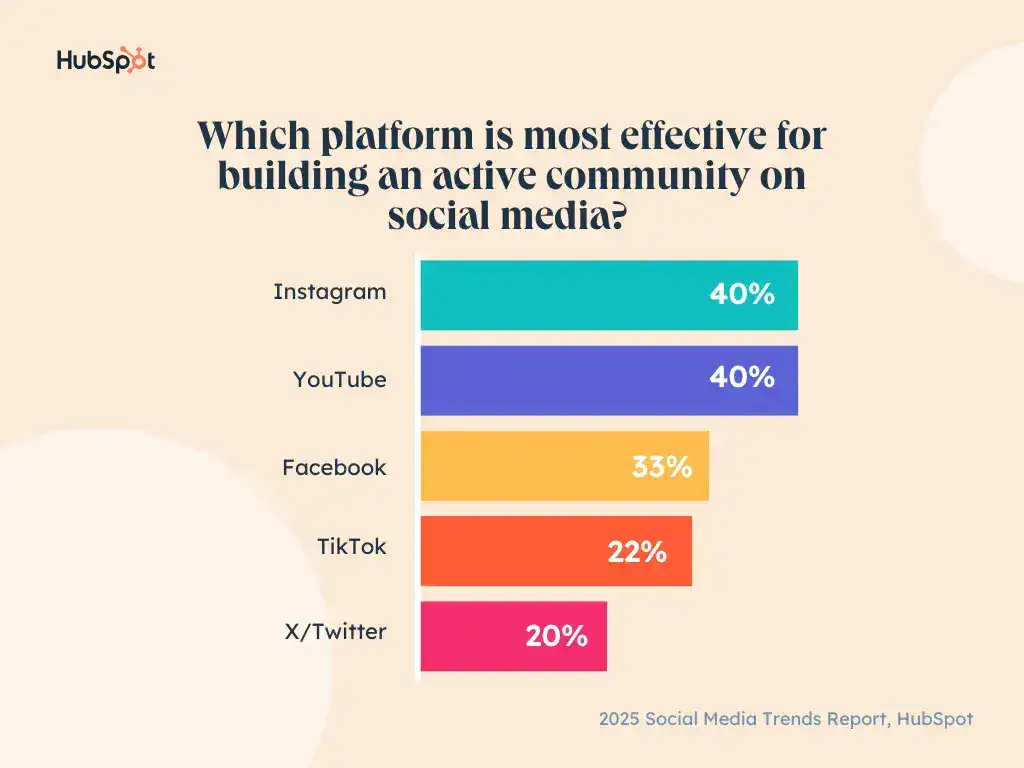
Taken together, these are not random feature drops. They are the platforms trying to get the best of both worlds: scaled feeds, but with more signals of genuine community so the AI has better data to work with.
If you read our recent piece on the hidden AI layer between your brand and your buyers, you’ll recognise the pattern. The unseen AI is learning from who comments, who replies, how you host, who sticks around, who feels safe enough to talk. That is how it decides which relationships are worth amplifying.
Where community really lives now: social front doors and smaller rooms
When marketers say “we’re going to build a community”, the slide usually shows a nice neat stack.
Followers at the top.
A shiny new community platform in the middle.
Loyalty and revenue at the bottom.
The reality looks more like tangled spaghetti.
Social platforms remain the front door. Instagram, TikTok, YouTube, LinkedIn and friends are where people first encounter your ideas and your humans. That is where they tag colleagues, duet or stitch you, save posts for later and quietly benchmark whether you feel like their crowd.
Once people care, they tend to drift into more focused spaces where the signal-to-noise ratio is higher. Private Facebook groups. Discord servers. Slack spaces. WhatsApp groups. Forums. Email cohorts. Membership hubs on Circle, Mighty or Skool.
And increasingly, some of the most interesting community energy spills offline again: run clubs, supper clubs, meetups, small events. Axios and others have written about “cult followings” and niche communities forming around women’s sport, wellness and culture, and you can feel that same energy bubbling in B2B meetups and peer groups too.
Underneath all of that is a simple human truth we come back to in our recent work on B2B trust and creativity. People join communities to satisfy very old needs: to trust, to fit in, to feel some self-worth, to be rewarded for good behaviour, to feel empowered.
They do not join because the brand guidelines say you are a “community-led organisation”.
People join for people, not posters
This is where the social behaviour really matters.
When you strip out the jargon, most thriving brand communities share the same pattern. A small group of visible humans are doing a lot of the heavy lifting.
- micro and nano creators who feel like real people
- employees with a point of view who keep showing up in the comments
- customers or partners who quietly become “hosts” for their own circles
We have been banging on about this for years. The bit that still holds is the idea of collaborators and community leaders. These are not the loudest influencers with the biggest reach. They are the people who sit in the middle of a network and help everyone else make sense of what is going on.
Fast forward to now, and creator trend reports are saying the same thing in different words. Global marketing trends work points to a shift from reach to relevance, with micro creators and employee voices acting as the anchors for communities. Our own “Social snapshot: Platforms back creators and brands need to catch up” pulled together the many ways platforms are doubling down on creators as the glue for community behaviours.
If you want a mental shortcut here, think less about “owning a community” and more about “identifying the humans our buyers would happily follow into a room”.
The aspiration–investment gap
On paper, community is having a moment.
Surveys tell us that most senior leaders now see communities as critical to the company mission, and community budgets are expected to grow. Many brands proudly report that they have an “online community” of some sort. On the surface, it looks like a solved problem.
Underneath, a lot of programmes still have:
- no full-time owner
- a vague or overloaded job-to-be-done
- success metrics that stop at member counts and post volume
- content calendars that look identical to the main social plan, just pasted into a forum or group
This is usually where things stall.
Communities behave much more like products than campaigns. They need a roadmap, a feature set, rituals, a host, and a feedback loop that actually leads to change. They cut across marketing, CX, product and comms. If nobody owns that knot, it frays.
From our side of the fence, when we audit social and community for clients, this is the missing layer we come back to again and again. The intent is there. The content is there. The people are already behaving in community-like ways in comments and DMs. What is missing is a clear design for how it all fits together and how much you are really willing to invest.
Three shapes community might take for your brand
I am wary of giving you a neat checklist here, because most brands are messier than that. But when you look across sectors, three broad shapes keep showing up.
The first is what I think of as community-style social.
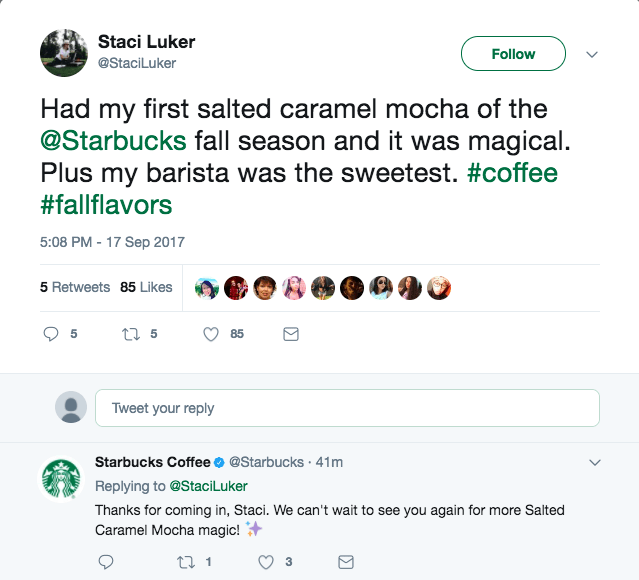
In this pattern, the “community” largely lives in the comments, replies, stitches, duets, quote posts and DMs on your existing social channels. The brand behaves more like a host than a broadcaster. There are recurring formats, recognisable regulars, and clear ways for people to take part.
The second is hosted groups on rented platforms.
Here, brands lean into places where communities already feel natural: Facebook Groups, Discord, Slack, Reddit, WhatsApp, LinkedIn groups. These spaces become the living room for specific segments or topics, while email lists and CRM carry the weight of ownership behind the scenes.
The third is a full community hub.
This is the world of dedicated platforms: Circle, Mighty, Skool, Bettermode, Higher Logic and the rest. It suits brands with very clear, high-value jobs for community to do, such as structured support, knowledge bases, certification, partner enablement or paid membership.
None of these shapes is “right” in isolation. What matters is whether the shape you choose matches the behaviour you already see in your social data and the level of investment you are genuinely prepared to make.
How this all ties back to trust, search and the AI layer
If you zoom out, you can see three threads pulling together.
First, community behaviours are becoming key growth signals. When people reply, discuss, tag each other, send posts on and show up week after week, the algorithms read that as trust and relevance. That strengthens your position in feeds and, increasingly, in answer engines and AI summaries. We dug into this in our “Trust is the new KPI” playbook and in our more recent work on B2B trust and creativity.
Second, social is now the front door to discovery. Social search has quietly stolen a chunk of your customers’ queries. People type questions into TikTok, Instagram, YouTube and LinkedIn, skim posts and comments, then let AI assistants summarise what they find. If you missed that rant, the “Social snapshot: Google who? Social search has stolen your customers’ queries” is a good starting point.
Third, the hidden AI layer means the quality of your community behaviour is training the system every day. Who engages, where, how often, and in what tone, all feed the models that decide where you show up.
Seen through that lens, community is not a bolt-on. It is the connective tissue between social, search, CX and growth.
Community has clearly moved from buzzword to serious line item. The brands that will get value from it in 2026 will be the ones that:
- accept that community is a long-term growth lever, not a quick reach hack
- respect that people join for people, not logos
- keep social as the front door and design smaller, higher-intent rooms behind it
- fund community like a product, with ownership and a clear job to do
Our job, sitting in the social data every day, is to help you see where those community behaviours already exist around your brand, and then decide whether you build, borrow or blend as you head into 2026.
If you are staring at a slide that says “build community” and wondering what that actually means in practice, we can pressure test it with you. Bring your social data, your current communities (even if they are just chaotic WhatsApp groups) and your growth targets, and we can work out whether community is the right lever, and what shape it should really take.