


January 16, 2018
Storytelling is as old time. Stories have been used to tell tales of history and adventure, and to build communities. As humans, our brains are hardwired to remember stories. We search for connections between the characters, their challenges and their successes. Telling an engaging story allows someone to get on the same wavelength as you. As a brand, this is key to securing new audiences and keeping your current audience along for the ride.
Shouting about how amazing your product is and boasting about all the benefits and great features, won’t win you any loyal customers in a noisy marketplace. Advertising claims are often perceived as untrustworthy and not worthy of a consumer’s time. That’s where storytelling comes in.
Storytelling isn’t as easy as you may think, you can’t simply take old content and rework it into something a little more refined. No, it’s about sitting down and working out the core values of your brand and how you can create compelling and honest content that will resonate with your audience. Data insight can be key, brands such as AirBnb use data collected from their audiences to create meaningful audience-first content that taps into the hearts and minds of their consumers.
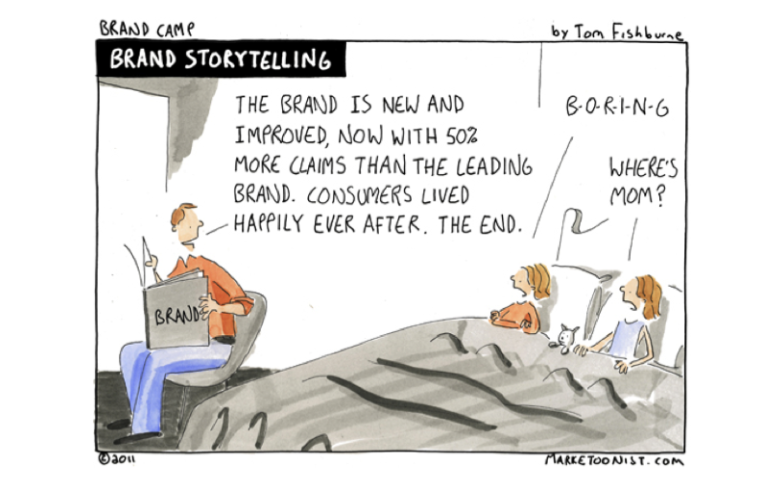
You only have to look at what some brands did with their Christmas campaigns. John Lewis, Debenhams, Heathrow Airport and the like all created ads that told a story and allowed the consumer to share in the pain or the happiness of the participant in the ad. They told a compelling story that created empathy. As a brand, if you can change someone’s emotional state, they will more than likely want to share that story with others.
So, before you lead your content strategy with a ‘buy now’ message, how about adding a little storytelling in with your CTA? Facebook ad formats such as carousels and canvas are perfect tools for telling a story. Ad sequencing can also be a great way to build narrative around your brand. You can sequence a series of ads that the user sees in order, allowing you to control the brand story from start to finish.
According to Kantar Millward Brown’s report on the ‘Media and Digital Predictions 2018’. “As well as adopting creative mediums such as video, infographics and editorial content, brands must also become better storytellers, as “narrative arcs” promote positive brand reactions during consumption.”
Remember, good storytelling is not just for Christmas…it should be a core part of your 2018 content strategy.