



April 8, 2026
Why the content people keep is often doing more for the business than the content they simply glance at.
One of the more useful things happening on social right now is that people are getting choosier.
That is not bad news for marketers. It is probably the best thing that could happen.
Because the old game of stuffing the feed, chasing every format trend, and calling volume a strategy is getting harder to justify. A lot of teams are working flat out to make more content, while audiences are getting quicker at deciding what is worth a second glance. And when that happens, the work that starts to win is not always the loudest post or the most polished asset. It is often the thing that feels useful enough to keep.
We have spent years talking about social as if the main job is attention. Be seen. Get clicks. Keep engagement ticking over. But the behaviour underneath that has moved on. More of the value now seems to sit in whether the content gets saved, shared, sent round a team, or returned to later when someone actually needs it.
In other words, the job is not simply to be seen. It is to be kept.
Busy is not the same as useful
If performance softens, the instinct is often to produce more. More posts, more edits, more cutdowns, more versions. It feels proactive. It keeps everyone occupied. It gives the plan a sense of momentum.
But the latest Sprout work points in a more encouraging direction. Publishing volume dropped while engagement rose by nearly 20%, even as 71% of marketing directors and 69% of CMOs still believe teams need to post more often to increase impact.
That gap tells its own story.
People are not rewarding content just because there is more of it. They are making sharper decisions. Quicker ones too. What gets a moment now tends to be something with a point, a payoff, or a reason to come back.
That should actually be reassuring.
Because it means smaller teams are not automatically outgunned by bigger ones. It means the answer is not endless production. It is better thinking.
The content people keep is often doing more than the content they like
Well that is a mouthful. But you get what I mean. ‘Cos this is where the conversation gets more interesting.
We still tend to celebrate the most visible signs of response. Likes. Comments. Views. Reach. They are easy to point to and they make a report look lively.
But they are not always the behaviours carrying the most commercial weight.
Again, Sprout’s 2025 Impact report is helpful here. Leaders say social drives awareness, customer acquisition, loyalty, revenue and even decision-making, but less than half rate their teams as expert at measuring business impact. The same report says 68% define social ROI through engagement, 65% through conversion, and 57% through revenue. So the intent is there, but the way teams are still talking about value is a bit behind where the business has already moved.
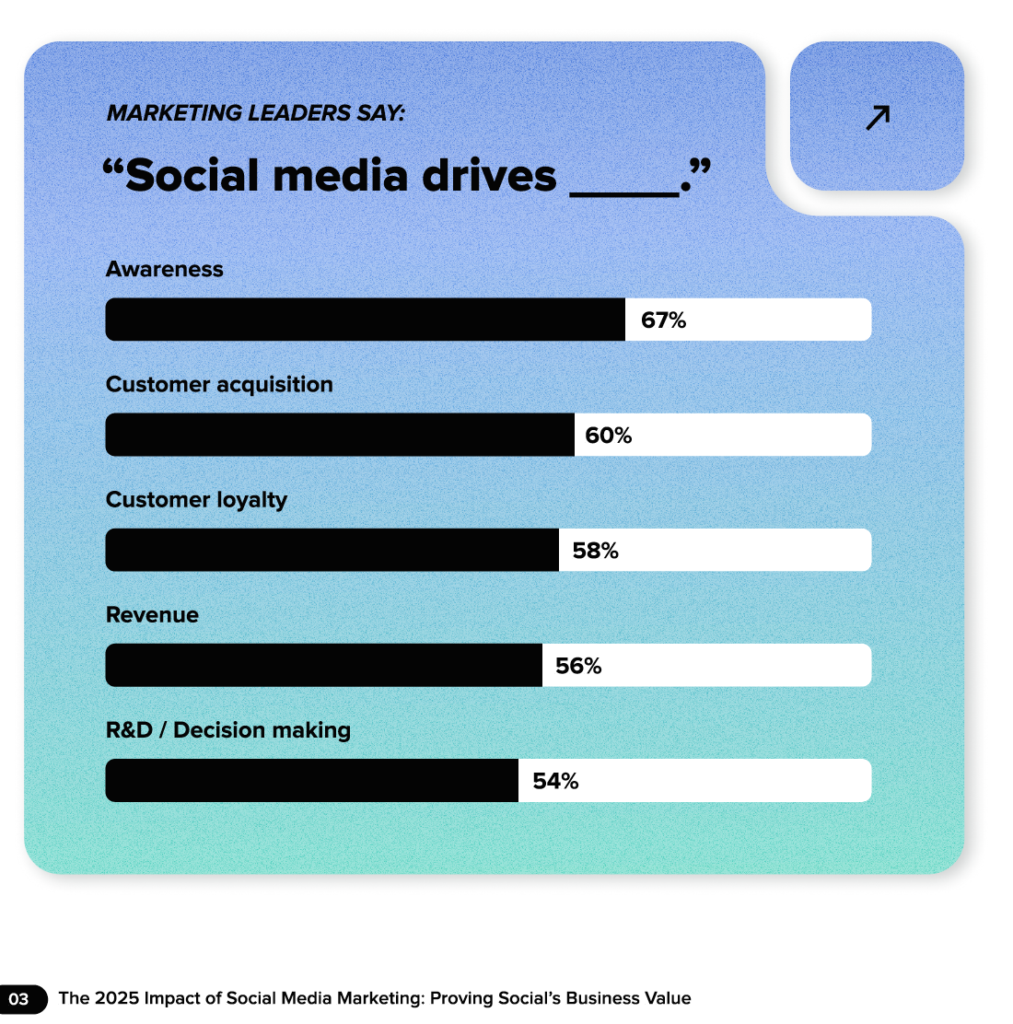
That tells me the issue is not that social lacks value. It is that we are still too often looking for value in the noisiest places.
Because those actions suggest something slightly different is happening. The person is not just reacting. They are holding onto the content because it might help them later, or passing it on because it might help someone else.
That is a very different level of usefulness.
And if you work in B2B, or in any higher-consideration category, it matters even more. Decisions are rarely made in one sitting by one person. Most B2B decisions involve six to ten stakeholders across finance, ops, IT and more. They get discussed. They get forwarded.
So content that can survive that messier journey is worth more than content that simply gets a quick public reaction.
We are still measuring the bit that is easiest to see
There is a wider pattern here.
B2B marketers are under sustained pressure to prove commercial impact to people outside marketing, especially in larger or more complex businesses where attribution is hard and budgets are watched closely. The same basic pressure shows up in NIQ’s 2026 outlook too: 74% of CMOs say they are under more scrutiny to prove ROI, while fragmented data and disconnected channels make that harder.
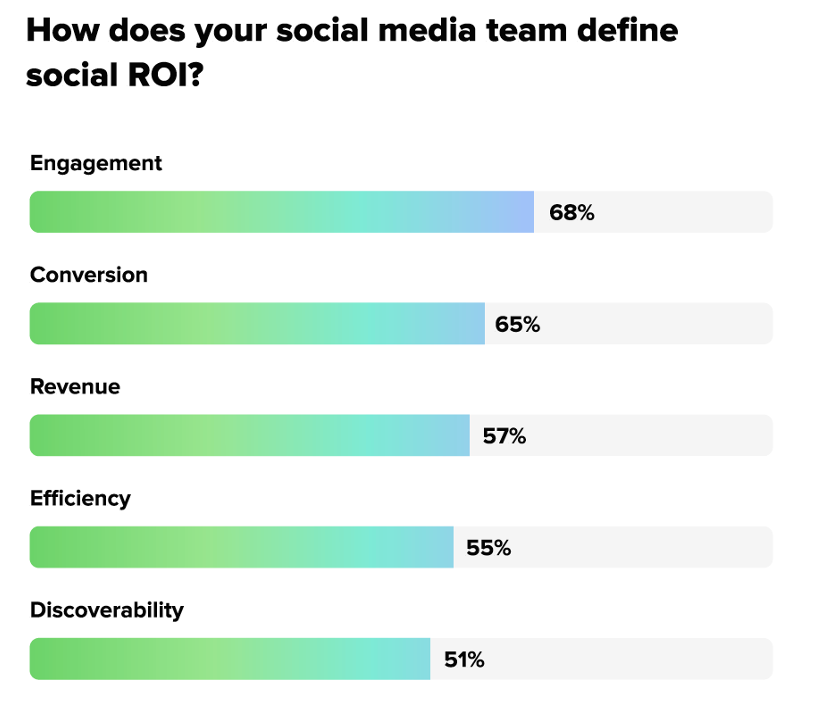
So it makes sense that teams default to the metrics that are easiest to gather and explain.
The trouble is that what is easiest to see is not always what matters most.
If someone saves a post because it finally explained a problem clearly, that may not look dramatic in the weekly report. If a carousel gets passed around Slack because it helped a team make sense of a decision, that may never show up neatly at all. If a post gets remembered and searched for a week later when the need becomes urgent, that effect is real even if the click did not happen in the first moment.
That is why social reporting so often feels a bit underpowered. We are trying to prove serious commercial influence with signals designed for surface reaction.
The stronger move is not to throw the old metrics away. It is to give more weight to the behaviours that suggest someone is keeping the content in circulation.
Social is becoming more like a working layer
This is the bit I think is quite positive.
It suggests social is maturing.
Not into something dry or worthy. Into something more useful.
People still want entertaining, distinctive work. Of course they do. But they are also using social to work things out. To compare. To check whether a brand sounds credible. To find examples. To reduce effort. To get a quicker read on whether something is worth paying attention to.
That lines up with what GWI has been saying more broadly. Social is still dominant media in people’s lives, but people are increasingly contradictory, with a bigger gap between stated intent and actual behaviour. The opportunity tends to sit in that gap.
So rather than assuming attention is the only prize, brands have a chance to think harder about utility.
- What would make this post worth saving?
- What would make it worth sending?
- What would make someone come back to it when the timing is right?
Those are much better questions than “how do we fill next Tuesday?”
What this changes in practice
It does not mean every post needs to read like a white paper.
It does mean content needs a clearer job.
Sometimes that job is discovery. Fine. Sometimes it is reassurance. Sometimes it is helping a buyer explain the issue internally. Sometimes it is making a complicated thing easier to grasp in twenty seconds. Sometimes it is simply being useful enough that the audience thinks, I might need that later.
And yes, this is where audience fit comes in.
Some audiences genuinely want more video because they are browsing quickly and deciding fast. Others respond much better to something pithy and practical. Some want a post with a strong opinion they can borrow. Others want a carousel they can swipe through and save. The platform matters, but the audience matters more.
Which is why generic best practice only gets you so far.
The best social plans now look less like publishing schedules and more like decision support. They are built around what this audience is trying to do, what would reduce effort for them, and what kind of content is most likely to stay with them after the scroll.
The more useful question
The question teams need to ask is not “how do we get more engagement?”
It is “what are we creating that is useful enough to keep moving?”
That is a much healthier brief.
It takes some pressure off endless output. It rewards better thinking. And it gets social closer to the serious job it is increasingly being asked to do across awareness, trust, demand and decision-making.
The work doing the real lifting is not always the thing getting the applause.
Quite often, it is the post someone quietly saves, sends to a colleague, or comes back to when they are finally ready to act.
If this has made you look at your content plan a bit differently, that is probably useful. Because the answer is rarely more noise. It is usually a better read of your audience, a clearer job for each format, and more confidence to stop copying what everyone else in the category is doing.
That is the work we do with brands every day. We help teams work out what their audience actually responds to, what each platform should be doing commercially, and where the content plan is following habit rather than evidence.
If you want a second opinion on your current mix, drop me a note. We can look at what your audience is actually stopping for, what they are keeping, and where social could do a harder-working job for the business.
Source Links
https://media.sproutsocial.com/uploads/2025/08/Sprout-Social-2025-Impact-of-Social-Media-Report.pdf
https://nielseniq.com/global/en/insights/report/2025/cmo-outlook-for-2026/
https://www.gwi.com/reports/connecting-the-dots-2026
https://www.b2bmarketing.net/reports/b2b-commercial-marketer-skills-guide/