


TiVo’s brief was beautifully awkward.
Viewers love shows, characters and comfort watches. They do not love “advanced content discovery” or other tech jargon. Our job was to pull “Powered by TiVo” out of the black box and make it feel like the mate with the best taste in telly.

The plan
We treated TiVo like a fan, not a feature.
Up front, we mapped a handful of “social shows” that behaved like mini franchises: Landman moments, Live Action Hits, dystopian picks, ultimate movie character showdowns, Brit-flavoured nostalgia and gameshows. Everything written in the same human voice as the comments. No product talk, no jargon, just “this is exactly what you fancy tonight” energy. All with a dash of creative excellence
Under the bonnet, we ran a very grown-up media plan.
Every format had a learning target for engagement and cost per view. We used low spend to test, then funnelled budget hard into the winners instead of spraying it evenly. Content and performance were built together, not thrown over the fence.
The impact:
In the UK, that mix did the heavy lifting. With a small budget on Meta, TiVo reached 1.83 million people and delivered around 1.75 million video views, generating 32.9k interactions. That is an engagement rate by reach of about 1.8%, comfortably above typical media and entertainment benchmarks on Facebook.
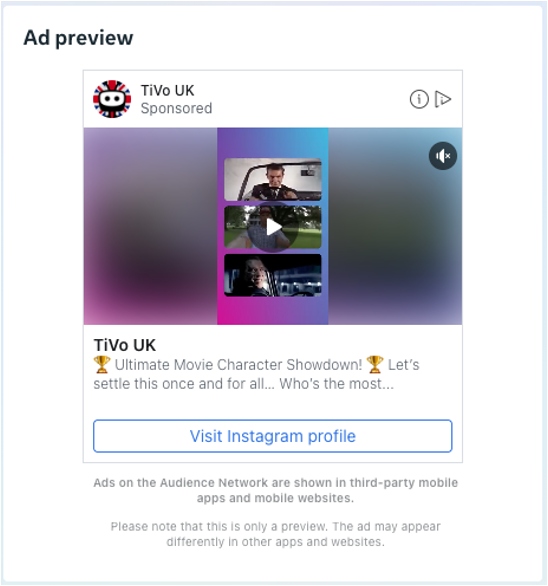
Media and entertainment brands on Facebook usually sit closer to 1.0–1.3% engagement per post, so TiVo’s 1.8% is clear out-performance for the category.
Cost per view landed at roughly $0.0036. In other words, we were buying full video views at a price point where many brands are just buying basic impressions, and at a fraction of what a view usually costs on video platforms. Average Meta CPMs hover around $7–8 per thousand impressions, and YouTube video views typically cost around $0.02–$0.03 each; TiVo was buying full views at roughly half the going Meta cost and around 6–8x cheaper than a typical YouTube view
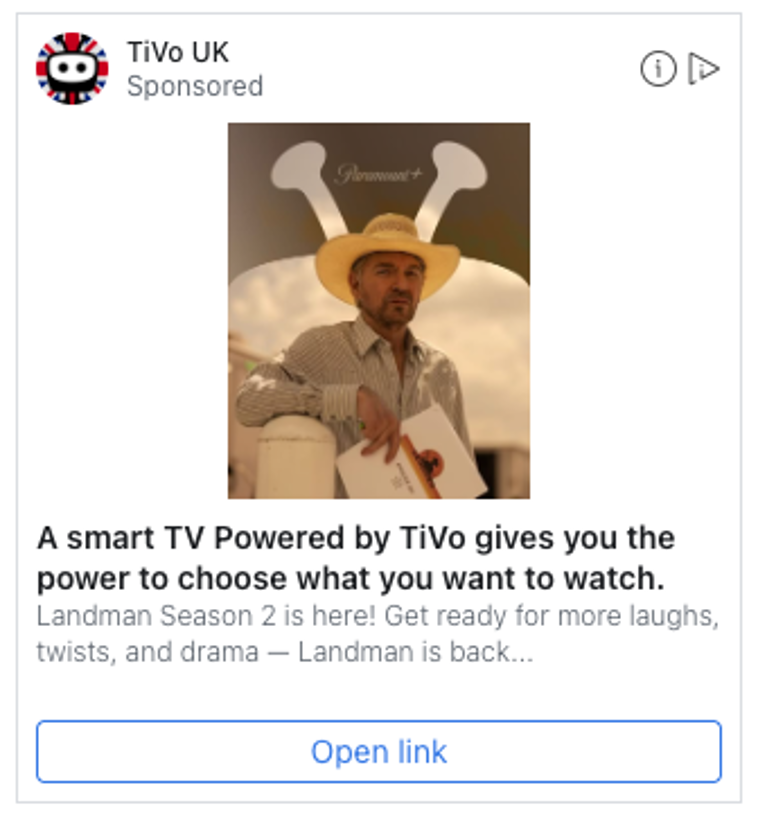
Individual “social shows” behaved like real TV moments. Landman content alone pulled in over 780k viewers, with a supporting cast of formats in the high five figures. The recommendation engine stopped feeling like infrastructure and started feeling like taste.
For TiVo, this did more than make nice dashboards. It gave the team hard proof that “Powered by TiVo” can buy entertainment-grade attention at below-market cost, in a format partners and platforms can actually see working.
Those results armed the commercial side with a simple line for planning: when TiVo’s badge leads smart, fan-first social. It moved social out of the “nice to have” bucket and into a live demand test bed, making it easier to argue for budget, easier to brief broadcasters and partners, and easier to plug the next wave of shows into a model that is already proven.
That is the point for us.
We do not just do social. We think like a crack team sitting between content and performance, so your clever tech shows up as something people actually want to watch.