


December 17, 2025
Your 2026 plan is hiding in your 2025 panic
I have spent the last couple of months sat with marketers who are knee deep in 2026 planning. Everyone is wrestling with the same mix of fear and ambition. Budgets are flat or shrinking, targets are going up, AI is quietly rewiring everything, and the funnel looks less like a funnel and more like tangled knitting.
So before we talk about what to do next, I went investigative. I pulled the data on which Immediate Future blogs you lovely marketers actually read in 2025. Not the ones we love. The ones you keep coming back to.
Your clicks tell a story. And that story is exactly where your 2026 plan needs to start.
What your 2025 reading says about your pain
This year, you were not hunting for fluffy inspiration. You were looking for survival guides.
Four themes jump off the analytics.
- Feeds, search and the hidden AI in the middle
Top reads:
Anything that explained how feeds, formats and AI search really work got disproportionate attention. You wanted practical answers on why engagement drops when you add a link, how answer engines pick their sources, and how to be findable when buyers start on TikTok, Reddit or Threads.
- Trust, basics and the CFO conversation
Top reads:
These are not sexy topics. They are the pieces you read when someone senior has just said “prove it”. You were looking for language, proof points and frameworks to defend brand, social and thought leadership against a very pipeline hungry business.
- Funnels, journeys and buying reality
Top reads:
You were poking at the gap between the lovely neat funnel slide and the chaos you see in actual journeys. Hybrid buying, self serve research, committee decisions, social search, communities. All making nonsense of last decade’s linear models.
- Content, creative and burnt out teams
Top reads:
You know you need more and better creative, especially video, and you also know your teams are exhausted. You were looking for rules of thumb, formats, and frankly, permission to simplify.
Underneath all of that sits a confidence wobble that no one really talks about. Marketing Week’s 2025 State of B2B Marketing survey found 11.8% of B2B marketers do not feel they have the right skills for the demands of the role, and another 8.2% are not sure. The free text comments talk about being nervous generalists, not owning the 4Ps, and lacking strategic control.
So it is not just the environment that is uncertain. The people doing the planning feel a bit shaky too. Which is completely understandable.
Put all of this together and you get a very clear picture of 2025 marketer pain. The plan for 2026 needs to answer that pain, not the generic trend decks.
Let’s pull in the wider evidence and turn it into something you can actually use.
Pain 1: discovery has gone feral – feeds, search and hidden AI
In 2025, social is officially huge. Global studies such as GWI and Digital 2025 from Datareportal put social usage at well over 5 billion people, with the average user spending more than two hours a day on platforms. Talkwalker-style reports suggest roughly three quarters of people have bought something after seeing it advertised on social. GWI’s latest stats say around 46 percent of people use social for brand research and discovery, with that number climbing sharply for Gen Z.
At the same time, search has stopped behaving like a single box on Google. People now discover new brands through an average of almost six channels, with search engines still strong, but social ads, creator content and comments snapping at their heels. GWI reports a steep rise in people using TikTok specifically to follow or find information about brands and products.
Then AI strolls in and sits between you and your buyer.
The Edelman–LinkedIn B2B Thought Leadership Impact work shows buyers are more cautious and more defensive in how they buy. They lean heavily on digital discovery to make sense of a crowded market. Answer engines, LLMs and AI summaries are quietly connecting the dots between channels, content and opinion.
That is exactly why Hashtags are dead: what works in 2025 took off this year. It was never really about hashtags. It was about the signals that tell platform and AI models “this is useful”.
Planning move for 2026:
- Treat feeds and search as one system. Your social captions, alt text, thumbnails, titles and comments are all part of how buyers and AI answer engines find and judge you.
- Build a simple “answer engine ready” checklist into every content plan. Clear question in plain language, clean headline, descriptive body copy, and metadata that spells out category, audience and problem solved.
- For B2C, make sure every sparkly short form video has clear product names, use cases and benefits in the text around it. For B2B, make sure your thought leadership, webinars and carousels have a crisp one line answer up top that a model can quote.
Pain 2: trust, thought leadership and the CFO who only sees leads
Our trust and basics blogs got less traffic than “hashtags are dead” but much longer dwell times. When you did click, you stayed. That tells me you were reading them when the pressure bit.
There is plenty of proof that this is the right fight.
The Edelman–LinkedIn B2B Thought Leadership Impact research and similar work show that:
- Around 73 percent of decision makers say thought leadership is a more trustworthy way to judge a supplier than marketing materials or product sheets.
- Three quarters say a strong piece of thought leadership has prompted them to research a product or service they were not previously considering.
- Roughly six in ten say good thought leadership makes them more willing to pay a premium or invite a brand into an RFP.
Meanwhile, Marketing Week’s State of B2B Marketing 2025 and its spin off on the “lead gen crisis” show over a third of B2B marketers under pressure to deliver MQLs regardless of quality, and more than a quarter being judged on lead volume alone.
So you are in a constant tug of war between “build trust, show value” and “fill the funnel”.
The blogs you read most often this year show how you are trying to reconcile that.
- Fix the B2B marketing basics and B2B marketing priorities for 2025 were about cleaning up propositions, audiences and journeys so social is not papering over cracks.
- Trust is the new KPI and Trust is the secret weapon in marketing were about measuring saves, sends, branded search and share of search, not just impressions.
- How to talk to CFOs about social media was you hunting for language that moves the conversation from vanity metrics to risk reduction, pipeline quality and pricing power.
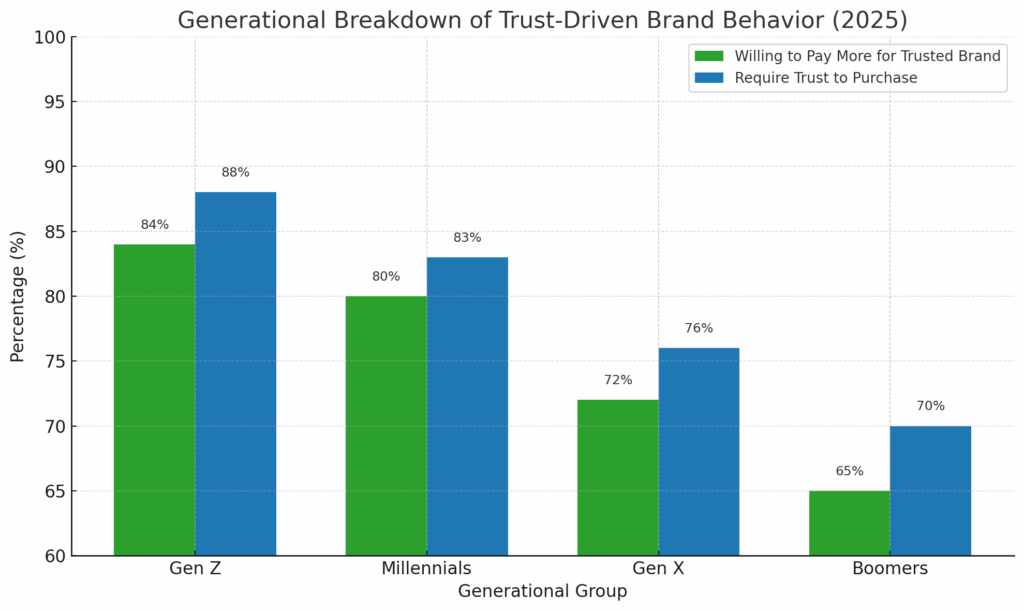
Planning move for 2026:
- Write down three trust outcomes you can defend at board level. For example:
- higher win rates where buyers follow your people on LinkedIn before the pitch
- more inbound opportunities that mention your content or community
- fewer deals stalling because new stakeholders do not know who you are
- Link those directly to social and thought leadership activity. Use saves, sends, branded search uplift, questions in comments and community engagement as early indicators.
- For B2C brands, bring in social commerce proof. Research from Retail Economics, Unbox and TikTok shows social commerce driving a significant chunk of festive spend, while only around half of retailers have social commerce properly switched on. If you can close that gap and show uplift in basket size or repeat purchase, your CFO will pay attention.
Pain 3: funnels, journeys and the buyers who do not behave
One of our most shared themes this year was that buyers decide early and your funnel is late.
The evidence is uncomfortable, especially in B2B.
- Edelman, LinkedIn and Ehrenberg-Bass all echo the 95/5 rule. Roughly 95 percent of business buyers are out of market at any moment.
- Forrester and Edelman highlight that nearly 90 percent of buyers experienced slower and more defensive purchasing in the last year. Many admit to making “safe” decisions more than 70 percent of the time.
- Newer Edelman–LinkedIn work also shows that more than 40 percent of B2B deals stall because hidden buyers inside the organisation do not feel informed or confident.
In consumer land, it is no simpler. Datareportal, GWI and others show that people discover brands through a messy mix of social ads, creator content, TV, retail media, search and offline chat. They do not move neatly from awareness to consideration to purchase. They swim.
That is why your Full-funnel social and brand gravity and Buyers decide early, your funnel is late posts have been so popular. You know the linear funnel model is broken, but you still need a way to plan.
Planning move for 2026:
- Build your plan around buying jobs, not stages. For example:
- “make sense of the problem”
- “gather options”
- “social proof and confidence”
- “justify internally”
- Map where social genuinely helps with each job. TikTok or Reels for problem stories and social proof. LinkedIn for expert takes and consensus building. Communities and Reddit for proof and risk checking.
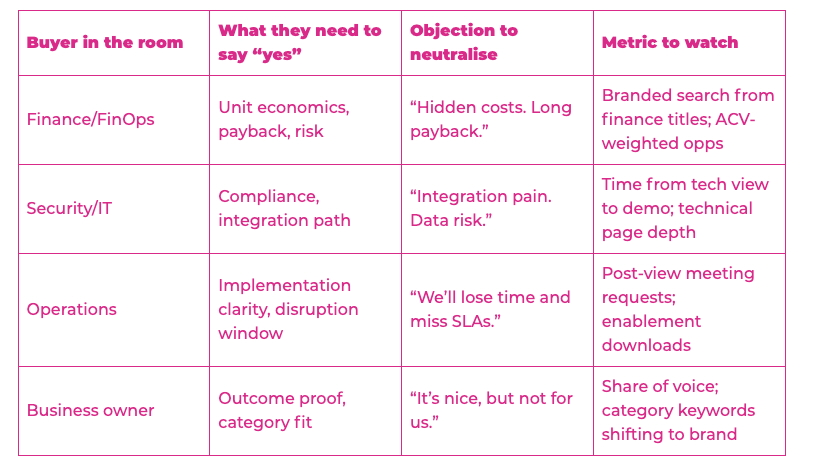
- For B2B, design social content that works for the hidden CFO, risk or ops stakeholder who will never attend your webinar, but will quietly read your LinkedIn post or pricing explainer.
Pain 4: content, creative and the team held together with coffee
If there is a common thread in your creative and video reads this year, it is this. You know attention has shifted to short form, but your team cannot work any harder.
The wider data backs you up, on both fronts.
The Sprout Social Index and related stats suggest UK social media ad spend will reach around £9.95 billion in 2025, with roughly 13 percent year-on-year growth and video formats stealing an ever bigger share. TikTok, YouTube Shorts, Reels, Stories, all racing to keep people scrolling.
At the same time, GWI’s global stats show billions of social users, each active on multiple platforms a month. That is a lot of surface area for one marketing team.
Your favourite posts on short form video, hooks, the 90 second rule and time saving hacks all point to the same planning truth. 2026 cannot be a plan that says “do more”. It has to be “do smarter”.
Planning move for 2026:
- Pick one or two “hero” formats per channel and commit. For example, one strong weekly LinkedIn carousel and one short talking head video, rather than seven different types of post.
- Build a content operating system. Templates, repeatable series, filmed once and cut many ways, with clear roles between strategy, creative and social.
- Protect creative thinking time. The stories behind Running on Empty? and Time-saving tips for busy creatives are anecdotal but clear. When teams are in permanent rush mode, quality drops and so does performance.
Four planning moves for 2026 that line up with your reality
Pulling this together, here is how I would structure a pragmatic 2026 social plan for both B2B and B2C.
- anchor everything in a small set of sharp pillars
Use your best performing content from 2025 as your guide. If Hashtags are dead and Links in social killing engagement did well, one pillar is clearly “understanding platform and AI behaviour” for your audience. If Trust is the new KPI and your thought leadership content performs, then “trust and proof” is another. Three to four pillars is plenty. - treat social, search and AI answers as one ecosystem
Plan content, creative and metadata together. Bring your SEO team, your social team and your content specialists into the same conversation. Make sure every flagship piece has a clear question, a clear answer, a strong headline, human stories and structured metadata. - measure what really moves buyers, not just what fills slides
Keep reporting on reach and engagement, because they help optimise the work. But elevate a small set of grown up metrics. In both B2B and B2C, that probably means:- saves, sends and dwell on key content
- branded search and share of search
- social sourced or influenced opportunities and sales, tracked in your CRM
- reduction in stalled deals where buyers engage with your thought leadership
- design for the humans doing the work
The cleverest strategy will die if your team is exhausted. Bake capacity into the plan. Fewer, better series. Realistic production standards. Smart use of AI as an assistant, not as a content firehose. Clear governance so you do not live in crisis mode when, say, a profile gets hacked or a platform rolls out another policy change overnight.
If you are B2C, add social commerce and creator integration to the mix. If you are B2B, add thought leadership programmes and employee advocacy. The skeleton is the same. The skin looks different.
Planning for uncertainty, not for perfection
The truth is that no one has a neat playbook for the next couple of years. The WARC Q3 2025 Global Ad Forecast and follow-on coverage show global ad spend set to grow about 7.4 percent to 1.17 trillion dollars in 2025, with social media taking most of the incremental growth. At the same time, buyers are overwhelmed, journeys are messy, and internal decision making is cautious.
Your 2025 reading habits tell me you already know this. You are not asking for more channels. You are asking for clarity, confidence and ways to make social work harder for growth.
So treat your own behaviour as the best focus group you have. Build your 2026 plan around the questions you actually clicked on this year. Use the external data to back you up in the boardroom. Then keep watching how your audience moves and adjust.
That is how you stay serious about growth without losing your own sanity.
If you want help turning this into a plan
If any of this has hit a nerve and you want a sounding board for your 2026 plan, we should talk.
We can audit where social really sits in your journey today, map the trust and discovery gaps, and help you design a social and content plan that your CFO, your team and your buyers can all get behind.
Or just go back through the blogs linked here, steal the bits you like, and use them as prompts in your planning sessions. If they helped thousands of other marketers this year, they will help you too.
Useful external reads and data
Here are some of the sources mentioned if you want to dig deeper:
- Marketing Week – State of B2B Marketing 2025 and Why are B2B marketers doubting their skills?
- Edelman and LinkedIn – 2025 B2B Thought Leadership Impact report
- WARC – Global Ad Forecast Q3 2025 and social ad spend upgrades
- Datareportal and We Are Social – Digital 2025 brand discovery
- GWI – Connecting the dots 2026
- SocialBee – social media statistics to know in 2025
- Talkwalker – social media stats for 2025
- Retail Economics, Unbox and TikTok on social commerce: Retail Gazette summary, Retail Rewired festive social commerce, and TikTok x Retail Economics overview
- Sprout Social on social’s role and proof: The 2025 Impact of Social Media Marketing report and The impact of social media across every part of your business
Use them as ammunition. The story they tell lines up very neatly with what your clicks have been telling us all year.