


February 19, 2026
Scrolling through social media in 2026 feels a lot like flicking through a hundred TV channels at once. We’re deep in the age of social entertainment, where the difference between a streaming platform and your Instagram feed is barely noticeable. With algorithms pushing short-form video and people spending well over seven hours a week online, brands have to grab attention quicker than ever.
And now, the age-old question: Is video more effective than stills?
If you go by the numbers, it looks like an easy yes. But when you look closer, things aren’t that simple. Video isn’t just “winning” anymore, it’s changing. And still images aren’t dead. They’ve just taken on a new purpose.
Let’s dig a little deeper, shall we?
The Reigning Force: Short-Form Video Still Leads
Let’s start with the obvious. Video still dominates. TikTok, Instagram Reels, and YouTube Shorts have turned vertical videos into the shared language of the internet.
Why? Because the algorithms are built to keep you watching. Nothing grabs attention faster than a quick, punchy video that makes you stop mid-scroll.
But the kind of video that works has defiitely changed. The chaotic, grainy clips that once ruled our feeds are on their way out. This year, audiences want value — content that teaches them something useful in the first few seconds while still being fun to watch.
- Silent Scrolling: Most people watch with the sound off. If your video doesn’t make sense with captions, you’re losing potential viewers.
- The Quick Hook: You’ve got less than three seconds to convince someone to watch. Miss that window, and the algorithm moves on. Byeeeee
The Big Shift: Serialised Content
The most interesting change in 2026 is the rise of series-style content. Research from Sprout Social shows that 57% of audiences want brands to create original content series.
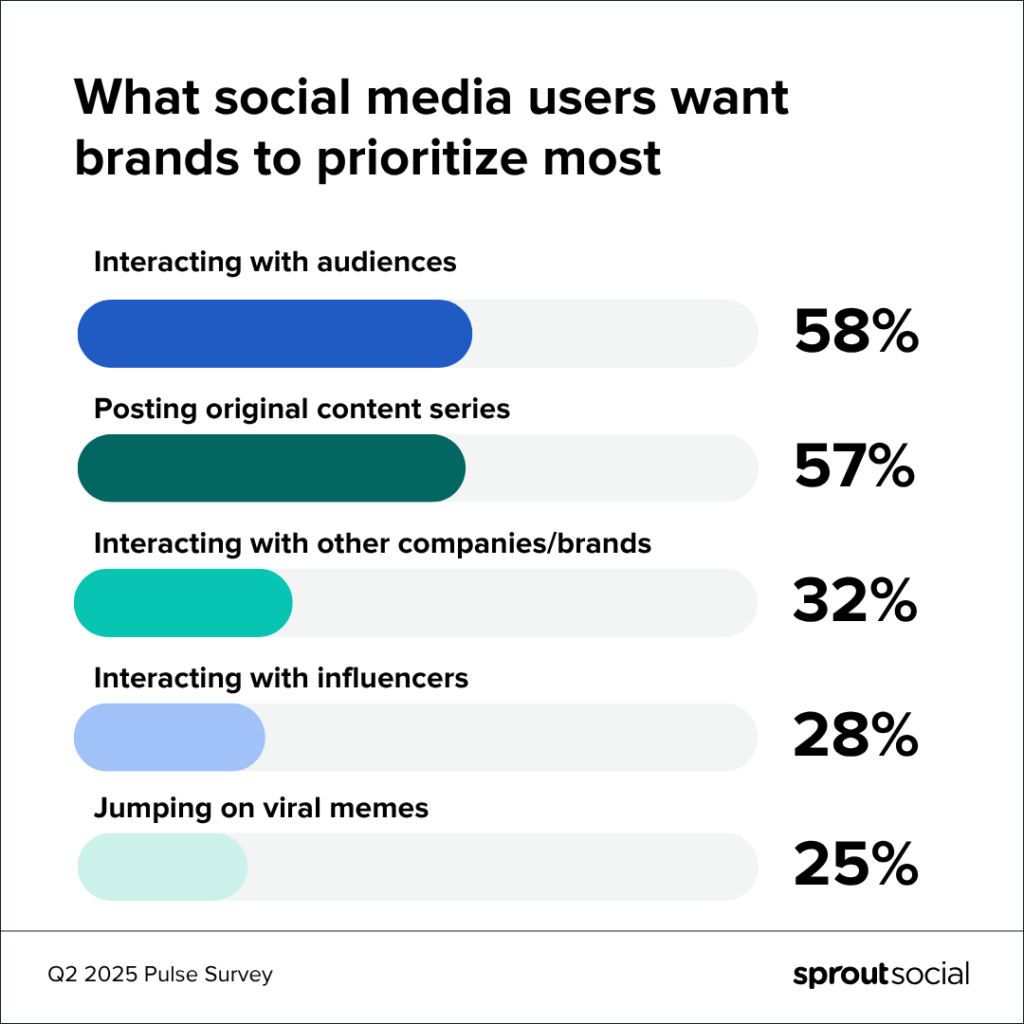
People are no longer just looking for quick laughs or one-off moments. They want familiar faces, running themes, and reasons to come back for more.
Much like the mid 2000’s era of “Get Ready With Me” (GRWM) and “Story Time” videos, people are craving “Day in the Life” episodes or regular behind-the-scenes snippets.
This is where video shines. It builds connection and loyalty in a way that still images simply can’t.
Are Stills Dead? Definitely Not
In a recent blog post, the CEO of YouTube announced that they will add support for still images this year. That alone tells us something important: static posts still matter.
In 2026, stills aren’t there to go viral. They’re there to bring clarity and drive conversions.
Kiara, a Social Media Manager interviewed by MINT Brand Marketing, summed it up perfectly: static content helps people instantly understand who you are. A good photo or graphic gets your message across faster than any caption ever could.
Think of video as your way to grab attention, and stills as your way to help followers make decisions.
The Carousel Comeback
If you need proof that stills are far from finished, look at the humble carousel post. Many brands are seeing the best engagement from carousels that mix photos and short clips, with rates climbing above 2%.
Carousels work well because:
- They invite interaction. People have to swipe, which keeps them on your post longer.
- They tell stories. You can spread your message across a few slides, keeping things bite-sized but interesting.
- They boost search visibility. Adding text to images helps with social SEO, so your post stays relevant for longer.
The Verdict: It’s About Collaboration, Not Competition
So, is video more effective than stills in 2026?
Yes, when it comes to reach, awareness, and storytelling. Short, captioned, vertical videos that deliver instant value will always find new audiences.
However, stills are stronger for brand clarity, quick information, and community building.
The smartest brands don’t pick one over the other. They use the COPE method (Create Once, Publish Everywhere) so every idea gets reused across formats. A single webinar becomes a few Shorts. A blog post becomes a text-led LinkedIn video. A photoshoot becomes a carousel.
Don’t drop one format because the other looks trendier. Use video to spark interest, and stills to build understanding and trust.
In 2026, balance is what wins.
If you enjoyed the blog and wanted to chat more in-depth about how IF can help you create sustainable content over different platforms, then why not give us a shout!