



April 15, 2026
You’re expected to drive growth from social, but the darn metrics don’t make it easy
You can feel it, can’t you.
Social isn’t there to look like a busy, beautiful extension to your website. It’s meant to show up in revenue, pipeline, retention. Something a commercial leader knows is moving the bleedin’ goal posts.
The trouble is, most teams are trying to deliver that with a setup that was never built for it. We’ve sort of got away with a cobbled together tech stack and processes that change with every stakeholder request.
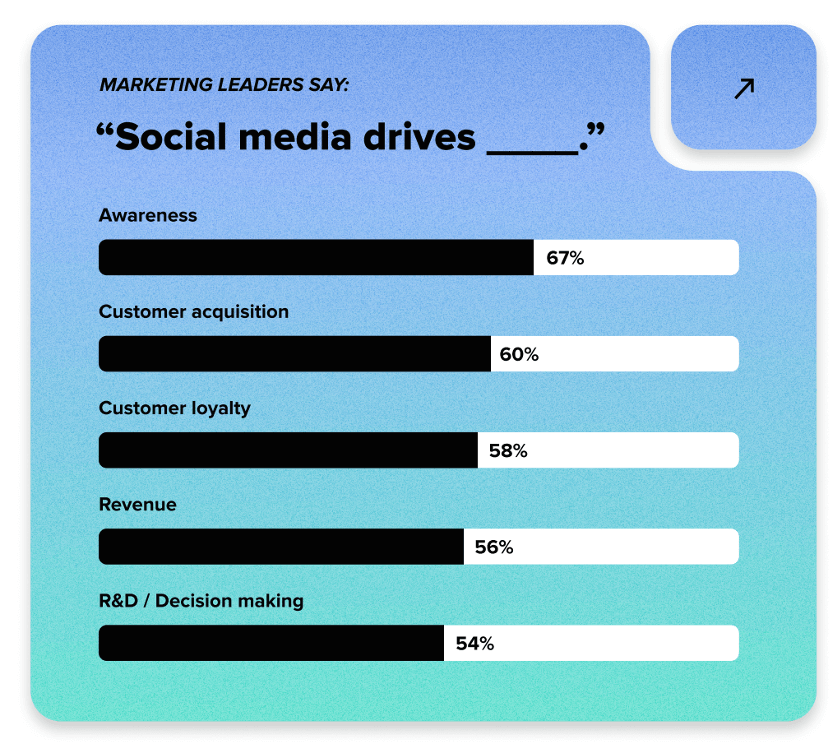
Sprout’s latest report puts a number on the unease. About 67% of leaders believe social drives awareness and more, yet only 56% say their teams are even moderately capable of measuring business impact. That gap is where confidence starts to wobble.
Then there’s the reality of the tools. 98% of marketing leaders say data doesn’t flow cleanly across their stack. On average, that costs teams 21 working days a year fixing tech instead of improving the work. Wow. Just wow.
So yes, the plan looks full. Content is going out. But when you’re asked what it’s actually doing, it can feel a bit… well…”erm”.
Silently moving to purchase
A lot of social’s value sits in quieter moments.
A post someone saves because it finally explains the thing without all the gobbledegook. A carousel that gets passed around because it helps someone make a case. You get the gist.
You can see it in behaviour. Mentions of hidden fees and pricing frustration are up 40%. “Deinfluencing” is up 79%. People are actively trying to avoid getting it wrong. After all, 90% of executives believe their companies are highly trusted by customers, but only 30% of consumers agree.
When that’s the mindset, a quick reaction is not the whole story.
The other frustrating thing
There’s another layer here that’s easy to miss.
A lot of what influences a decision now sits outside your neat reporting lines. It’s in group chats, internal threads, forwarded posts, or someone saving something and coming back to it later. That behaviour is growing, and it doesn’t show up cleanly.
Apparently, 93% of global sharing happens through dark social channels. And crikey, some estimates put it higher. One recent analysis suggests 95% of content sharing happens on dark social. The range varies by methodology, but the direction is consistent: the vast majority of sharing never appears in a dashboard.
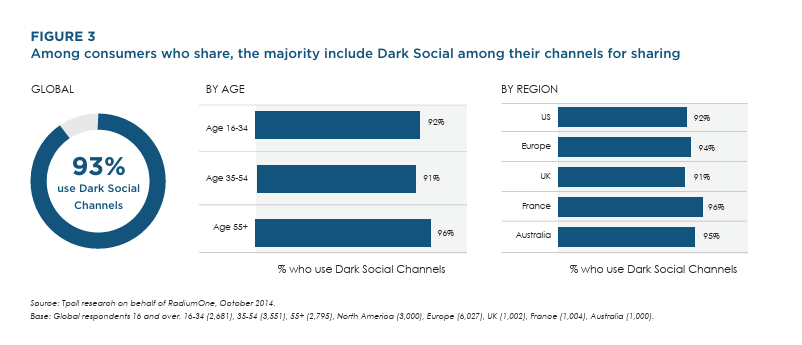
Which means social is doing more of the heavy lifting than it gets credit for, while looking less effective than it actually is.
That gap is where frustration builds. You’re being asked to prove impact in a system that can’t fully see it. And social carries weight it can never prove
Why things feel harder than they should
We’re asking too much of a single post.
One piece of content has to grab attention, explain the offer, build trust, answer objections and nudge someone forward. That’s five jobs. No wonder it buckles under the weight.
The volume pressure makes it worse. Brands are publishing an average of 9.5 posts a day across networks. Consumer-facing industries push well beyond that, sometimes four times higher. And yet engagement went up 20% year on year in 2024 when brands pulled back on frequency and focused on quality. The content machine is running hard in the wrong direction.
The pace compounds it. Trend windows run 24 to 48 hours. That’s the window. But 71% of companies with more than 1,000 employees take more than a day just to approve quick-turn content. 27% take over a week. By the time the post clears sign-off, the moment has gone. 67% of marketing teams say they regularly miss cultural moments for exactly this reason, not because the idea was wrong, but because the process was too slow.
The people doing the work are feeling it. More than half of social professionals are burnt out or close to it. 58% of marketers describe themselves as overwhelmed. Burnout is now the third most common reason people leave a career in social. That’s not a workload problem. It’s a structural one.
And still the briefs land expecting one post to do everything.
The result is work that’s decent but not decisive. Not weak. Stretched too thin across too many jobs, produced too fast, approved too late, measured against outcomes it was never built to deliver alone.
UGC and creators do different jobs
Most teams lump them together. It sounds efficient. It muddies the brief and blunts both.
Creators get you noticed. Reach, attention, a point of view people will give time to. That’s the job, and budgets are moving that way, with 67% of marketers planning to increase creator spend. Creators earn the first look. They open the door.
UGC carries a different kind of weight. It’s proof. It answers the quieter, more important questions that sit between interest and action (does this actually work, did real people buy it, would someone like me choose it). 55% of shoppers hesitate to buy a product without it. 78% say it influences their purchasing decisions. And 93% of marketers who use UGC report it outperforms traditional branded content. That’s not a small effect. That’s the thing that tips a decision.
The distinction matters at the brief stage. High-performing brands no longer treat UGC as one content bucket. They separate short-form discovery content from conversion-focused proof assets (like video testimonials, product page UGC) because they answer the final trust questions buyers have before taking action. Creator content opens the consideration. UGC closes the doubt.
Treat them as the same thing and you end up asking creator content to also reassure, and UGC to also inspire. Neither does its job well. Both feel stretched.
Use them for the moment they’re built for and the picture clears. Creators open the door. UGC gives people enough confidence to walk through it.
A more useful way to think about it
If one post can’t carry all that weight, stop asking it to.
Think in terms of moments. Some content earns attention. Some content moves people. Both matter. They do not need to be the same thing, made by the same people, briefed in the same way.
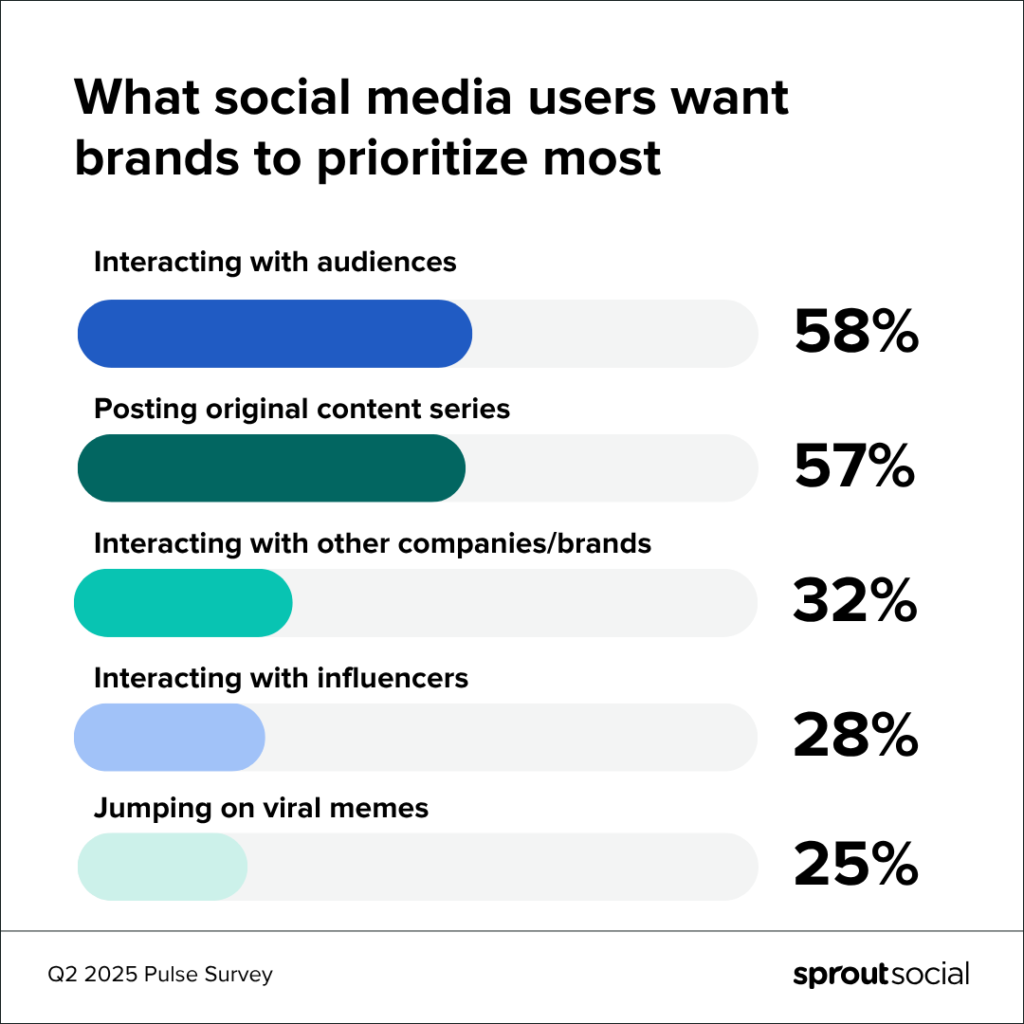
That one shift helps a lot. Briefs get sharper. Production becomes less of a scramble. And it becomes much easier to see what you actually need.
What to change without messing it all up
Four practical moves:
Map content to intent. Be clear what each piece is there to do — awareness, consideration, or conversion. Brief it accordingly.
Build a small set of repeatable formats so people recognise them and come back. Consistency compounds.
Make clarity the standard. If it takes effort to understand, it won’t travel. The content doing real work in private shares and group chats is usually the simplest thing in the room.
Look beyond the obvious metrics. Saves, shares, repeat visits, branded search, share of search. These are the signals that tell you someone is taking it further, which is where the commercial value sits.
Your mantra should be…
If social is meant to drive growth, it has to help people take a step forward: understanding something properly, feeling confident enough to act, being able to explain it to someone else.
That last one matters more than it sounds. 82% of B2B buyers trust information from internal colleagues far more than external marketing content. Which means the best thing your content can do is become the thing someone forwards to their team.
Not viral. Just useful enough to share once, with one person who matters.
If you want a second opinion on how your content is pulling its weight, we’re happy to take a look. It’s usually clear quite quickly what’s doing a job and what’s just adding to the pile.
Sources
https://media.sproutsocial.com/uploads/2025/08/Sprout-Social-2025-Impact-of-Social-Media-Report.pdf
https://emplifi.io/resources/state-of-social-media-marketing-report-2026/
https://www.hootsuite.com/research/social-trends
https://nielseniq.com/global/en/insights/report/2025/cmo-outlook-for-2026/
https://sproutsocial.com/insights/social-media-trends/