


July 6, 2021
Now, this may seem like a straightforward question. But in fact, this is a complex process that varies between channel, industry, audience size, objective and spend. So, if you came here for a short answer, you’re out of luck. But what we can give you is a top-level guide to figuring it out.
We’ll use LinkedIn as an example, to keep it as concise as possible.
Step one: pull out the relevant metrics from your projected results
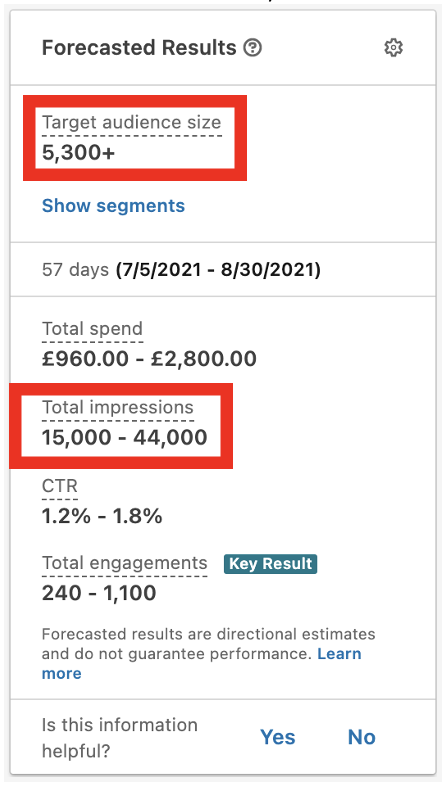
When you’re building a campaign in LinkedIn, there are two key metrics you’re going to want to take note of to accurately determine duration: Audience Size and Impressions.
Step two: determine your impression frequency
The next step is to determine your Impression Frequency. This tells you how many times each member of your audience, on average, will be served your advertisement. This is calculated by Audience Size ÷ Impressions.
So, using the sample screen shot, the Impression Frequency is between 2.8 and 8.3.
Step three: research industry averages
This is where the hard part comes in. You’ll need to do your research into finding out how many times your industry needs to see a social media advertisement before converting. We’ve listed some good sources we often rely on:
- WordStream
- Rival IQ
- Your channel Account Manager – this is the most reliable source and what we tend to rely on, but not the most readily available
After speaking to our LinkedIn Account Manager, we determined that the ideal frequency rate for our audience was 5 (Side note: this is a C-Suite audience in Public Sector). Once we knew that, we played around with the Spend and Duration until we got a suitable range. This gave us a duration of 57 days.
If your question is when to post on social media, we have a blog for that too. Drop us a note for any other social media questions that have you stumped.